Tuesday, 22 September 2015

Werner Mantz in the Mijnstreek


It was two decades ago that I first came into contact with the work of Werner Mantz. At the time I was studying photography at the Kunstakademie in Hasselt, Belgium and had asked an acquaintance of mine to model for some portraits I had been assigned to do. My subject happened to be a daughter of Dutch architect Frits Peutz, one of the leading lights of the modernist movement in the early 20th century, such as Bauhaus. When I presented my model with the photographs from our studio session, she was so enchanted by the results that as a token of her gratitude she gave me a photo book with a retrospective of Werner Mantz’s works1. The photographs included several studies of her father’s most famous creations, which Peutz had commissioned Mantz to photograph, not least the Glaspaleis in Heerlen. The Glaspaleis was put on the list of the 1000 most important buildings of the 20th century by the International Union of Architects in 1999. It was a kind gesture on her part and I treasure the book (and its photographs) in much the same way as a footballer might prize a cup-winner’s medal.

Recently, I was asked to translate a number of texts into English for a catalogue dedicated to Mantz’s work in the coalmining region of Limburg (de Mijnstreek). I was delighted and of course jumped at the chance. The catalogue was being published to coincide with an exhibition in Heerlen, organised as part of the year-long Jaar van de Mijnen event (‘year of the mines’) to commemorate the 50th anniversary of the coalmines being closed down and to throw some light on the region’s industrial heritage. Like Peutz, Mantz was a man of his time, his work likewise reflecting a passion for modernist architecture which is clearly visible in the works on display.
Below is the translation of an extract from an introductory text to the catalogue written by exhibition curator, Flos Wildschut. It provides us with an interesting insight into Mantz and his work in the Mijnstreek …   

In the 1930s, the German photographer Werner Mantz (b. Cologne 1901 d. Maastricht 1983) was commissioned to produce an extensive series of photographs documenting the Limburg coalmines. At the time, Mantz had two photographic studios, one in Cologne and the other in Maastricht, which he ran together with his colleague Karl Mergenbuam. Mantz had been visiting Maastricht on a regular basis since 1926 and his interest for contemporary architecture in the Netherlands led him to decide in 1932 to set up a photographic studio in the city. For Mantz, who had a Jewish background, the political situation in Germany at the time also played a role in this decision. He kept both studios until 1938. After the Kristallnacht in the November of that year, he closed down his studio in Cologne to settle permanently in Maastricht.

Internationally, Werner Mantz is considered to be an important photographer in the field of portraiture and architectural photography. In Cologne he produced photographic portraits of key figures from politics, science and art. He also made a name for himself as a photographer of Nieuwe Bouwen, a movement for modernist architecture, which he documented in line with the ideas of the Nieuwe Zakelijkheid ('New Objectivity'). His subject matter he portrayed in all its beauty and simplicity, with meticulous attention to structure and form. Famous German architects, such as Wilhelm Riphahn, Clemens Klotz and Erich Mendelsohn, asked Mantz to photograph their work. Likewise in the Netherlands, he attracted the attention of architects. He was commissioned to do work, amongst others, for Frits Peutz, Toon Swinkels, Jos Wielders and Alfons Boosten. In 1936, Mantz photographed the Schunck department store, also known as the ‘Glaspaleis’ (glass palace), for Peutz. In the two photographs taken of the roof terrace at Schunck, the Limburg mines are clearly visible in the background. Here, modern architecture becomes one through the combination of industry and technology.

Both photographs might be considered as forerunners to the two key commissions that Mantz was given in 1938 to record major works of industry and technology in Limburg. The provincial ministry of transport commissioned him to document the regional network of roads. In two of the photographs from the 'roads' series included in this publication, the mines can be seen in the background. The Dutch state mines also commissioned him to photograph various mines in the region. At the end of the 1930s, Mantz began to concentrate more and more on portraiture photography in his Maastricht studio. From that time onwards, his standout work would be portraits of young children, often dressed for their first communion, using natural light. As a result, for a long time his work of the 1920s and 1930s faded into obscurity.

A change in this came about in 1975. It was in that year that the Cologne-based art group, Kölnischer Kunstverein, organised an art exhibition entitled ‘Vom Dadamax bis zum Grüngürtel’. This helped put Mantz's photographs into the context of international photography for the first time and led to a rediscovery of his work. By that time, Mantz was an old man. He had closed his studio in 1972 and retired to live in Eijsden.
A year after the exhibition in Cologne, Rudolf Kicken organised the first solo exhibition of Mantz's work in his Lichttropfen gallery in Aachen. A major breakthrough ensued in 1977 when a series of ten of his photographs entitled 'Mijnen in Limburg' were included in a specially compiled exhibition to celebrate 150 years of photography at Documenta 6 in Kassel, organised by Klaus Honnef, head of exhibitions at the Rheinisches Landesmuseum Bonn. In the catalogue, the photos were placed alongside the work of Germaine Krull. During this period, the aforementioned museum in Bonn and the Bonnefantenmuseum in Maastricht both acquired photographs by Mantz for their collections. Nowadays, Mantz's work appears in many collections owned by museums at home and abroad.

Since the renewed focus on Werner Mantz in the 1970s, his work has been regularly seen and discussed in exhibitions and publications. These also included photos of the mines. Nevertheless, until now Mantz's series of photographs of the Limburg mines has never been seen or published in its entirety. The ‘Werner Mantz in de Mijnstreek exhibition and publication brings an end to this. On the basis of archival research and an inventory of various (inter)national photograph collections, an attempt has been made to reconstruct Werner Mantz's commission from the Dutch state mines using existing vintage prints. To this end, no new prints have been taken from negatives or photographic plates, which are kept in the Nederlands Foto Museum. However, a number of contact prints have been included in the exhibition and catalogue. These prints and negatives have been researched to identify the coalmines which are pictured and to gain a better understanding of the way in which Mantz worked.


The quest to find the photographs which Werner Mantz produced of the mines in Limburg resulted in 79 assorted prints of vintage quality. In fact, Mantz's body of work on the coalmines appears to be much wider than the remit he had been originally given by the state mines.
They testify to the special way in which Mantz went about his work. The style of Nieuwe Zakelijkheid ('New Objectivity'), which he had adopted during his time in Cologne, was used here too: the emphasis is on form and structure, experimentation with light and shade, with particular attention to aesthetics. But his work appears to contain more dynamism too. In the series of the various mines, we see a photographer at work who tries to capture the soul of architecture in cinematographic style. Together with Mantz we - as viewers - can reconnoitre the pitheads or climb one of the tall smokestacks in order to study the construction of another from a different perspective, in both space and time. First, we get a bird's-eye view of the mines and then zoom in on the details.

Mantz’s photos of the Limburg mines represent an important documentary record of their time. Through his eyes, we can observe the reality of the 1930s: a glorious industrial era which we look back on now from a completely different perspective. Back then, no one was aware of carbon emissions, climate change and lung disease. Nevertheless, it's not just about the historical dimension. Mantz's photographs demonstrate a truly documentary approach, in which the subject matter is meticulously researched, with the power of the images playing as much a role as their documentary significance.

Extract from a translation from the original Dutch of the introductory text to the 'Werner Mantz in de Mijnstreek' exhibition catalogue, written by Flos Wildschut, exhibition curator.
The exhibition in SCHUNCK* Collectors House, Heerlen runs from 20 September to 25 October 2015, where the accompanying catalogue (ISBN: 978-90-74106-41-2) can also be purchased.

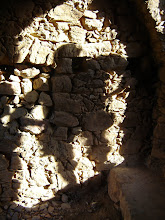
Photograph: Emma state mine, Brunssum/Hoensbroek, ©Werner Mantz / Collection of the Nederlandse Fotomuseum, Rotterdam

1 Werner Mantz / Fotograaf, published by Drukkerij Rosbeek BV, November 1990 (ISBN 90-73367-02-6)

For more information on Werner Mantz (in Dutch): https://wernermantz.wordpress.com

See also: De geur van kolen
 

Tuesday, 14 July 2015

One crowded hour of glorious life


On July 14 every year, I would phone my dad and we would reminisce about events that had unfolded a century and more previously. Since my father’s passing away last summer, for the first time that opportunity has been sadly denied me. It’s a shame, he would have rhapsodised about the remarkable feats which led up to the moment when the Alps’ most iconic peak, the Matterhorn, was scaled for the very first time on this day 150 years ago.

Ever since I was old enough to remember, a colour photograph of the Matterhorn decorated the wall above the mantelpiece in the living room of our home in Chorlton-cum-Hardy, Manchester. I was too young at the time, but my eldest brother recalls my father coming home from work one evening with a brown-paper parcel from Boots’ picture-framing department containing the said item. The picture depicts a snow-covered mountain, its almost perfect pyramidal shape rising imposingly above the lush green meadows below. Occupying the foreground is a line of four timber haylofts, which drop away from the centre right of the picture. In the background, against an otherwise brilliant blue sky, are faint wisps of cloud around the summit.
We do not know what my father had in mind when he bought the picture, but, for some reason or other, the mountain held a spell on him. What sparked his fascination remains a mystery.
Whatever, my father (and later myself) developed a curiosity in the mountain. Our local library held a copy of Edward Whymper’s Scrambles Amongst the Alps, a title that was otherwise long out of print, so in order to satiate our interest in the author’s escapades we had to keep renewing the loan on the book. I was in my early teens and was already familiar with intrepid tales of exploration, such as Scott’s Last Expedition: the personal journals of Captain R.F. Scott and Shackleton’s South. For me, Scrambles Amongst the Alps was another such blockbuster read.

In 1865, the Matterhorn was the last major peak in the Alps which remained unclimbed. A steady flow of amateur climbers had been coming to the continent from Britain over the previous decade. Middle-class Victorians were moneyed and had plenty of free-time on their hands. Those with a sense of adventure headed for the mountains. Over a period of ten years, slowly but surely, the highest peaks in the Alps succumbed to their endeavours. It became known as the Golden Age of Mountaineering. Of all the summits, the Matterhorn, which straddles the Swiss-Italian border, was the one mountain that eluded the climbers of the day. At 4478 metres, the mountain is by no stretch the highest in the Alps – Mont Blanc is 4810 metres - but its isolation and apparent inaccessibility made it a formidable proposition. To add to its claims of invincibility, superstitious locals spoke of spirits that dwelt on the mountain which would hurl down vengeance from its impregnable heights on anyone who had the audacity to approach.
In 1860 Edward Whymper arrived in the Alps for the first time. He was a 20-year old wood engraver from London who had been commissioned to produce a series of alpine scenes by a publishing company. Brash and brazen and with little trepidation, he used his time to pursue a newly found passion for climbing and the young artist soon became an accomplished mountaineer, ticking off many of the major Alpine peaks himself, some as first ascents. More than most however, he was drawn to the Matterhorn and was one of the first to believe that the peak was surmountable.
He made his first sallies on the mountain in 1861 and in the years that followed made no fewer than 8 attempts to reach the summit. Employing local guides with mountain skills and a knowledge of local conditions to assist him, he tackled the Matterhorn from various angles, most frequently from the Italian side. His first-hand accounts of his forays on the mountain in Scrambles Amongst the Alps provide a fascinating insight, not only into the fledgling sport of mountaineering, but also into 19th century life in the Alps.
Despite the miscellany of assaults on the mountain by Whymper and his contemporaries, by 1865 the Matterhorn still remained unconquered. On 10 July of that year, Whymper found himself in the village of Breuil on the southern Italian flanks of the mountain. He had been hoodwinked by local guides, whose services he believed he had commissioned for yet another attempt on the peak, but who instead had been enlisted by a team of Italians. Not to be outdone, Whymper hurried to Zermatt in Switzerland, assembling a motley group of climbers, consisting of assorted English gentlemen and Alpine guides, to tackle the mountain from the northern side, still thought to be the most difficult of the two most viable routes to the summit.
There were now two teams of climbers, simultaneously hell-bent on winning the race to the top of the Matterhorn. The Italians were vying for the glory of their native valley and the fledgling Kingdom of Italy. The English-led group, on the other hand, were headed by a man who was obsessed by the idea of being the first on the summit. The latter group, under the command of Whymper, included 2 Zermatt guides (the Taugwalders Sr and Jr) and Michel Croz, an accomplished French guide, well-known to Whymper from many of his previous expeditions in the High Alps. Also in the group were three English ‘gentlemen’: Lord Francis Douglas, Charles Hudson and Douglas Hadow, the latter a climbing novice who was on his first tour of the Alps that summer.
Whymper’s assault from the Swiss side began auspiciously. Relative to the Italian ridge on which so many attempts had been previously made, the Hörnli (or Swiss) ridge proved surprisingly easy. On the night of 13 July 1865, they camped at 3400 metres and at 6.30 a.m., on a bright summer morning, they started for the summit. They were astounded by the relative ease of the climb. Apart from one difficult section on the Matterhorn’s northern face, they encountered little resistance and by 1.40 p.m., incredulously Whymper and his companions stood triumphantly on the summit. At that point it was still not certain whether the Italians had set foot on the summit ridge, but with no sign of fresh footprints in the snow, it was clear that Whymper and his companions had won the day. The Italians were eventually spotted several hundred feet below. They threw a torrent of stones down the cliffs at which “the Italians turned and fled”. The victors spent an hour on the summit. Whymper’s (partly  paraphrased) account below captures the moment: 

We paid homage to the view. The day was superlatively calm and clear and the atmosphere perfectly still, free from all clouds or vapours. Mountains fifty, maybe a hundred miles off looked sharp and near. All their details - ridge and crag, snow and glacier - stood out with faultless definition. There were forests black and gloomy, and meadows bright and lively; bounding waterfalls and tranquil lakes; fertile lands and savage wastes; sunny plains and frigid plateaux. There were the most rugged forms, and the most graceful outlines bold, perpendicular cliffs, and gentle, undulating slopes; rocky mountains and snowy mountains, sombre and solemn, or glittering and white, with walls turrets pinnacles pyramids domes cones and spires! There was every combination that the world can give, and every contrast that the heart could desire. We remained on the summit for one hour - one crowded hour of glorious life*. It passed away too quickly, and we began to prepare for the descent. 

In such perfect conditions, the climb back down should have been a formality for experienced climbers, even of the Victorian age. However, the combination of a hastily put-together team and slipshod equipment represented the weak link in the chain. They roped up and went down the mountain. As they faced the most difficult part of the descent, Hadow, the most inexperienced of the group, who was in the leading section, lost his footing and slipped. He dragged Croz, Hudson and Douglas with him and together the four of them hurtled earthwards. The rope should have broken their fall, but somehow, the section of rope between the top three and the lower four snapped. “For a few seconds, we saw our unfortunate companions sliding downwards on their back and spreading out their hands endeavouring to save themselves. They passed from our sight on to the Matterhorn glacier below.”
The Matterhorn, freshly vanquished, had claimed its first victims.
The survivors, Whymper and the two Taugwalders, returned to Zermatt in a semi-traumatised state. Afterwards there was an inquest. The survivors of the tragedy were initially accused of having cut the rope, but they were later cleared of any culpability in the accident. The fatal section of rope it seems had been substandard. Nevertheless, alpinism was widely condemned as a sport in the English papers and what was for sure, mountaineering had lost its innocence. The accident was a defining moment of 19th century exploration and mountaineering and effectively marked the end of its Golden Age.
Whymper survived to tell the tale and continued a career in wood engraving and mountaineering, but never at the same intensity. He wrote the book Scrambles Amongst the Alps, not just his own account of the first ascent of the Matterhorn, but also all his previous attempts on the mountain. In it he relates the events leading up to its culmination, not least with a description of the main protagonists. Scrambles Amongst the Alps is more than just an account of the unfolding drama on 14 July 1865, but is a tale of companionship, heroism, rivalry, humour, compassion and, ultimately, tragedy. Sometimes fact can be more powerful than fiction and for me, that’s what makes it such a wonderful read.

My father secretly fancied himself standing on the summit of the Matterhorn. As he got older he realised that it would be an impossible dream. At the age of 71, he first set his eyes on the mountain on a crisp clear autumn day in 1987 and he walked up to almost the exact spot where the photograph he bought at Boots’ picture-framing department was taken. I’m sure it was one of the most magical moments of his life.

Yes, I’m sad that I won’t be able to ring my father this year, but I’ll be forever grateful to him for that photograph on the wall.

* quote from The Call by Thomas Osbert Mordaunt

Saturday, 21 March 2015

Going native


When I’m teaching, I always tell my English students that vocabulary (the bricks) and grammar (the mortar) are the building blocks of language learning. A learner of English, or of any other language for that matter, must master these two aspects in order to communicate to a competent level in that language. In fact, the principle applies at whatever level of proficiency you operate: the more creative your communication, the better your command of the language’s vocabulary and grammar must be.

The most effective way to do this is through total immersion, where the learner spends time in an environment operating solely in the target language. But not everyone has this opportunity and even then complete immersion might last several decades before ‘total’ proficiency is attained. This is not to put language learners off of course: by no means do all students of a foreign language aim to achieve the highest possible standards, they may simply wish to use that language in a way which serves their purpose, possibly asking for directions or reading a recipe.

When we consider vocabulary, we immediately think of individual words, but these words by themselves do not unlock the door to successful language learning and usage. If learners and users of a second language wish to express themselves fluently and accurately in speech and writing, they must learn to cope with the vast wealth of word combinations and permutations (for instance, nouns, verbs, adjectives, adverbs and prepositions) that make up that language. A normal dictionary, an essential tool to learning vocabulary, splits up meaning into separate words. However, words in isolation are much less powerful when we are constructing a text.

A single word may have different meanings, depending on the situation in which it is used, but only becomes clear when set alongside other individual words to make a phrase or sentence. Take the word ‘work’, for example. It is both a noun and a verb. The noun itself has several different dictionary definitions, such as: the product of effort (as in, ‘it was back-breaking work’); a job (‘I do secretarial work’); an artistic creation (‘Beethoven produced some masterly works’); a building programme (‘major restoration work is being carried out’); or (usually in the plural) a factory (‘the works’ canteen’). As these examples show, only when the word is seen as part of a sentence or phrase, can its exact meaning be deduced. Context therefore, is the all important key. 

The examples I give here make the meaning of the words clearer because they ‘collocate’, that is, the words combine to produce natural-sounding speech and writing. So we refer to these word or phrase combinations as ‘collocations’. In English, we say ‘strong wind’ and ‘heavy rain’, not the other way round. For a native speaker ‘heavy wind’ and ‘strong rain’ sound completely unnatural, but early learners of English will not recognise this distinction. So whilst collocations – or chunks of vocabulary – may be highly predictable to native-speakers and used without a second thought, to language learners this is anything but the case. 

Roughly speaking, there are two categories into which collocations can be grouped: grammatical; and lexical.
Typical grammatical collocations in English include prepositional expressions: afraid (of); dependent (on); (on) the bus; (in) hospital. Prepositions are amongst the biggest obstacles to successful language learning because they are language-specific. A Dutch learner, for example, might unwittingly say, ‘afraid for’, ‘dependent of’, ‘in the bus’, and ‘in the hospital’ because they collocate with different, non-corresponding prepositions in their own tongue – and although they would be understood, it would single them out immediately as non-native.
A lexical collocation might be a typical construction such as: ‘to do your homework’; ‘to take a photo; and ‘(her message was) crystal-clear’. Here, even competent Dutch speakers of English might say, ‘make your homework’, ‘make a photo’ and ‘glass clear’, without realising that these are unnatural collocations. 

To illustrate the enormous diversity of collocations that are out there, let’s take a look at the language of work. Language learners and professional linguists beware! 

Often, I’m asked what line of work I’m in. Mostly, I tell people that I make a living as a freelance translator, but I also dabble in teaching. I have been plying my trade in this business ever since I was made compulsorily redundant 20 years ago. 
People who are unlucky enough to have their jobs axed may have to go on the dole for some time while they seek out pastures new, in other words a career change. This will probably involve scouring the classified ads and then writing a letter of application for a suitable position. Potential candidates may be called for interview at which they will be quizzed about their work experience, educational qualifications and personal qualities and perhaps questioned about their burning ambitions. The successful candidate taken on by the company - before being offered a permanent contract - will have to work a probationary period or follow on-the-job training to first earn their spurs. To get on in the world of business you may have to be prepared to assume managerial responsibilities. Rapid promotion may ensue for outstanding work and help you step onto the next rung of the career ladder. Ultimately, you might progress to a position in middle or senior management and perhaps enjoy fringe benefits, such as a company car, an expense account, private health insurance, annual bonuses and other perks. Alternatively, you may end up in a dead-end job doing run-of-the-mill tasks and find yourself having to get out of a rut. Having a job with no career prospects can be demoralising.
I must admit, working as a freelance translator – within reason – it’s possible to organise my work as I wish without having a humdrum nine-to-five existence. Yes, all the red tape involved in being self-employed, for example, sending off VAT-returns every month, can be a bugbear, but the diversity of assignments, the freedom of being able to work almost anywhere, not to mention being my own boss, gives me enormous job satisfaction

Whilst the correct use of collocations is just one way of achieving proficiency in a foreign language, I’m not arguing here that fluency is solely a question of applying grammar and vocabulary appropriately. It is much more than that. For example, pronunciation, proper use of punctuation, recognising the difference in and the correct use of formal and informal register, and apposite use of slang and swear-words - aspects of language that come naturally to a native speaker – all have to be learned as well, usually through trial and error. 

Concluding thoughts of a translator ...
When it comes to collocations, it’s not just beginners who make mistakes. In fact, far from it. However proficient you might think you are at a foreign language, unless you have undergone complete immersion, it is well-nigh impossible to build up the same wealth of collocative vocabulary as a mother-tongue speaker. I know this from experience: even after being in direct contact with the language for 30 years – many would call me fluent – I find myself tripping up over Dutch idioms and expressions. This is where translators who claim they can work ‘professionally’ into a second non-native language – working at the cutting edge of communication - can really get found out. That’s why I don’t do it. 
Indeed, I find it strange that a competent native-speaker translator would want to put their professional credibility at risk by translating into a second language they have not fully mastered, a phenomenon which is flabbergastingly prevalent in the translation industry.
The use of collocations is just one example of why native-speaker translators are invariably better at translating into the target language: they are simply more competent in recognising and using the natural-sounding equivalents of source-language collocations in their mother tongue.

Saturday, 7 March 2015

Dutch Mountains


Exploring the wild open spaces has always been something that has come naturally to me. Thrust a camera in my hands and I’m happy as a lark, as I gaily gad about the great outdoors. I might not be the most intrepid walker or the most painstaking photographer on the planet, but when I’m in the mood, I feel on top of the world. At home, to soothe the overwhelming longing for the hills on dark winter evenings, since my childhood I have had the habit of poring over maps, guides and photographs pining for more propitious days ahead.
In contrast to my usual toing and froing, visiting family and friends in various corners of Europe, this winter – for one reason or another - I’ve been leading a fairly sedentary existence, trying to settle down into the humdrum routine of life at home. A torn meniscus has kept my outdoor shenanigans in check. Plans – such as cross-country skiing - have had to be shelved whilst the medics decided on what was best for my knee. My mountain-gazing has been restricted to looking at the photo of the Matterhorn I inherited from my father and which now hangs on my living-room wall. It has not been an easy time and over the past few months, the map-poring has been accompanied by soul-searching.

So, thank goodness for the Dutch Mountain Film Festival.
No, this is not a joke. To resolve any ambiguity it should be stressed that the event is a celebration of mountain films rather than a cinematic fixation on a hillock protruding out of the flatness of the Low Countries. As it happens, the film festival is held every year in my home town of Heerlen, which is located in the southernmost and loftiest region of the Netherlands, close to the border with Germany and Belgium. In fact, it has even been accredited with an ‘international’ status by the umbrella organisation for such things, the International Alliance for Mountain Film(IAMF).
So please, no more laughing.
The Dutch Mountain Film Festival (DMFF), held last weekend, is an annual event that is a miscellany of activities revolving not only around film, but the theme of mountains in general. The festival caters for film fanatics, mountaineers and nature lovers and is the perfect antidote for outdoor types like me who have been confined, albeit temporarily, to the armchair.
There’s a film to suit every taste. If you like the spectacular, such as watching adrenalin junkies jumping of vertical cliff faces or witnessing off-piste skiers tumble downhill through endless mounds of snow, then the DMFF is the place for you. But the festival offers more thought-provoking fodder, stories that tell the tale of simple mountain-folk, and films which recall a historical period or document the trials and tribulations of a mountain adventure.
In addition to the more than 50 films, there is a varied programme of side events featuring music, art, food, sports and - last but not least - photography.

Each year, three photographers are invited to exhibit a selection of photographs at the DMFF. This time, Paul Lahaye – curator of photography - allocated space to Alex Buisse (for his photographs of base-jumpers), Thomas Humpage (trail running) and Sean Vos (mountain photography pur sang). The fourth part of the photography exhibition was set aside for the winning entries for the DMFF photo competition.
For the 2014 event, I had the great honour of being asked to sit on a panel to judge more than a hundred entries for the DMFF photo competition. For this year’s festival, I was flattered to be asked back, this time as chairman of the jury. Entrants were asked to post their photos to the DMFF Facebook page and this time round there were no fewer than 150 submissions, each entry capturing a moment in the mountains that was special to the photographer in question. With my fellow members of the jury, Paul Lahaye, Jac Weerts and Roger Kengen (the winner of last year's competition), it was our difficult job to sift through the photos and decide on a short list of ten. It has to be said that this arduous task was tempered by the final round of judging which had been conveniently arranged in a local hostelry on a wet and windy night in November. It was a long but enjoyable evening. The winning photo was sent in by Ruben Emanuel and his photo can be seen on the DMFF Facebook page along with the other 9 photographs that were given pride of place at the festival.

In view of my personal plight vis-à-vis my ‘wounded knee’ – on a more upbeat note - presiding over the photo competition over the past few months has provided some welcome relief and helped rekindle my interest in landscape photography and my appreciation for mountain photography through the ages.
Among my favourite books I read this winter was a Christmas gift I’d received about the famous explorer Il Ducadegli Abruzzi, the Italian prince who probed unchartered regions as far-flung as Alaska, the North Pole, the Ruwenzori Mountains of East Africa and the high peaks of the Himalayas (long before they had become fashionable targets for mountaineers). To all intents and purposes, his endeavours rank alongside those of his more acclaimed contemporaries, such as Amundsen, Shackleton and Scott. In his home country of Italy he enjoys a worthy recognition.
However, it was not the ‘Duke’ who instils in me a wow-factor, but the photographer he took with him on his expeditions: Vittorio Sella - the most accomplished mountain photographer of his age, perhaps of all time. Sella was born into a well-to-do family in Piemonte and he became a proficient mountaineer and mastered the technical skills of photography at a time when both mountain climbing and mountain photography were still in their infancy. His superlative depictions of mountain scenery stand up against anything we are capable of producing with our modern-day technology, yet he was faced with enormous obstacles that we would find unimaginable today. His expeditions would involve meticulous planning with limited resources and he would be faced with the prospect of hauling heavy equipment around over rough terrain day after day. The fact that he was able to achieve his exceptional quality is quite remarkable, but this was largely due to the use of large photographic plates. Special equipment would have to be ingeniously devised to carry its fragile and precious contents. If he were unsatisfied with his results or the conditions had been too inclement on a first climb, he would simply wait for another window in the weather and go back again, often several days later.
How times have changed since Sella. Nowadays, we can climb a hill, stitch together a panoramic photo of the mountains and send it round the world on social media in an instant.
Yes, photography is a fantastic medium for capturing our experiences in the mountains, but it’s worth remembering where it all started.

And thank you Dutch Mountain Film Festival – and its organisers Toon Hezemans and Thijs Horbach - for helping to make my winter bearable.

Sunday, 30 November 2014

Harry Vaughan Davies 1916 - 2014


This year marks the 100th anniversary of the Great War, when the so-called civilised world was plunged into darkness from which it only reawakened four years later. It was during this period of madness that on 6 October 1916 my father, Harry Vaughan Davies, came into the world. The largest and perhaps bloodiest encounter of the conflict, the Battle of the Somme, was still raging at the time and it would be another two years before the world finally came to its senses. But they were uneasy times: in his formative years my father would have lived through the Irish War of Independence, the Great Depression and the rise of communism and fascism.
Despite all this, my father was born into an ordered and privileged world. His father, Harry Hayward Davies, worked as a salesman for S & J Watts, a major textile business in Manchester, which occupied the warehouse that is one of the city’s stand-out architectural features today. Harry Hayward's parents had been publicans in Salford and he first met my grandmother Rachel when she was working as a servant in their hostelry, the ‘Craven Heifer’. They moved into Eskdale, a house on Mayfield Road in the Victorian estate of Whalley Range in South Manchester, which had been built as a desirable neighbourhood for ‘gentlemen and their families’ at a time when Manchester was said to do things which the rest of the world only did tomorrow. By the time my father was born, King George V was on the throne and the toll gates to the estate had been dismantled and electric trams now ran along its perimeters.
My father went to William Hulme’s, an independent grammar school, and every week he would attend Sunday services at St Edmund’s church on Alexandra Road, along with his three siblings, Bessy, Tom and John. They were fine parents, my father would recollect, and he had a happy childhood. Often he would tell us about the tricks that he and his brothers would play (on sometimes unsuspecting victims) in Mayfield Road. Holidays were part of that world and every year, the family would pack their trunks, board the train at Manchester Exchange and spend their summers at Colwyn Bay on the North Wales coast, a place which they all grew to love and one that would later become a firm favourite with future generations. As a young man, one of my father’s greatest pastimes was playing the clarinet in a band with friends, at a time when the great dance bands were all the rage.
When he finished school, he started a career in insurance but after a few years this was rudely interrupted by the Second World War. My father was called up and joined the Royal Artillery and it was during those turbulent years - working on the anti-aircraft defences in Oxford - that he met Olive, a Scarborough girl, with whom he fell in love. On 5 September 1947, after having been demobbed, they got married at St Mary’s church in Scarborough. Their betrothal marked the start of 65 years of happy marriage.
Back in civvies, my father reassumed his career in insurance and the young couple moved to a semi-detached house in Chorlton-cum-Hardy, the next suburb on to Whalley Range in South Manchester. By the time I was born ten years later, my father was already in his forties and Harry and Olive had already brought two sons, Francis and Jonathan, into the world.
When I came along in 1957 the world was changing rapidly. It was an age of post-war reconciliation, mass consumption and increasing prosperity. Dad bought a car in the Sixties (even though he didn’t have a driving licence at the time). This new-found mobility enabled us to go on undreamed-of trips and holidays further afield (notably the Scottish Highlands), as hitherto we would have had to take a train or coach to holiday destinations like Scarborough and Colwyn Bay. The car opened up new horizons for my mum and dad and they would eventually travel abroad , still uncommon in the Sixties and Seventies.
Dad continued to work at Sun Life, but he was shrewd enough (and well-off enough) to retire when he was 59 (when I was still at school). In 1984, when we had all left home, my parents decided to move to Thornton-le-Dale on the edge of the North Yorks Moors, which was a favourite spot my parents visited on trips to Scarborough. It was here, where they played an active part in village life, that they spent their happiest years. He was able resume pastimes he had enjoyed as a young man, such as walking and playing instruments, such as the clarinet, saxophone and trombone. He also became quite prolific at painting and drawing: oils, acrylics, charcoal and pencil - you name it - he tried it. Every week mum and dad would go on weekly outings to Scarborough or York. But what they enjoyed most of all were the visits from their 5 grandchildren.

Dad has a lot to answer for.  
He had a huge array of interests ranging from motor racing to cricket, classical music, jazz music, playing the clarinet and the saxophone, hymn-writing, walking, mountains, Welsh rugby and the Welsh language, steam trains, liners and many others, so I suppose some of it was bound to rub off on us.
On holiday, my father and mother would take us on long walks. It certainly had an effect on me: my mother used to call me the ‘mountain goat’ and I can never recall a time that walking long distances has been a chore.
When I was a young, he took us to test matches at the local cricket ground. Australia, West Indies, India, we saw them all. In my teens I became a junior member of Lancashire County Cricket Club, and come rain or shine, after school my friends and I would stroll down to Old Trafford to watch the proceedings. 50 years later I now find myself running my own cricket team in Holland.
And as long as I can remember, my dad had a photograph of the Matterhorn above the fireplace in the living room. I was fascinated by the legendary feats surrounding its first ascent and later in life I made my own pilgrimage to the mountain.
He was always engrossed in something or other. It was one of his endearing features. From that point of view, I don’t think we couldn’t really have wished for a better dad.

It’s so long ago, it’s difficult to remember dad as a working man. Quite often, while mum was getting tea ready in Badminton Road, as kids we would happily skip to the bus stop on Wilbraham Road, impatient to meet him after work. And when mum took on a part-time job and had to catch the early bus to work every day, he took on the task of getting us ready for school with gusto.
Holidays were always the best time with dad. We would have a whale of a time. He was able to relax and – except when the car broke down, as it frequently seemed to do - he was able to have quality time with the family. Fun was guaranteed! 
He was both a gentleman and a gentle man. The vast majority of the time, dad was good-humoured and if he did get cross, it was invariably with himself (a trait I can reliably say he has passed on to the next generation). But woe betide if, on one of the very rare occasions, he did get angry with us as kids, it meant we really had done something wrong!  

Paradoxically, he was able to devote more of his free time to his five grandchildren in his 38 years of retirement, than he could offer us as a working father. They had a whale of a time with grandpa. He would invariably end up doing silly things with them - playing games, composing rhymes and making up songs. He even went as far as to write verses for our dog!

I could write a lot more about my dad, suffice to say he was a great husband, father and grandfather. Everyone who knew him has their own fond memories of him and he meant a lot to many people. 
Dad has been with us so long, I can hardly imagine life without him. It was tough making him comfortable in the latter years. I spent two weeks with him this July and life was taking its toll, but despite the grumbling and grouching that accompanied old age, he was still very much the dad I knew and loved. Whenever I came to stay, he was overjoyed when I arrived and tearful when I left. I always tried to make light of it, in the hope that there would never be a last time, but sadly there was. He probably loved us more than we could imagine.
It will be hard without him and I shall miss him terribly.